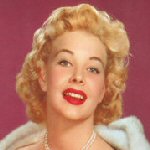
Death of a Legend
Novice journalist Linda Oates had been working for Celebrity Magazine less than a year when she was called into the editor's office one morning and given what should have been a routine assignment. A devoted Al Pacino fan, the reporter had hoped she would be assigned to cover the New York opening of The Godfather: Part III, but that story was given to a writer with more seniority.
"How would you like to get out of town for a little while?" Finn McConnaughey, the editor, asked.
"And go where?"
"I want you to take the evening flight up to Massachusetts."
"What's in Massachusetts?"
"An old television star died there this morning," Finn explained. "I want you to talk to her friends and neighbors and then do a nostalgia piece on her life and career."
"Who was it that died?" Linda asked with indifference, expecting her boss to say some actress whose name was only a dim memory in the public's mind.
"Francine Ballard."
"What?" the reporter cried with surprise.
"Francine Ballard. She starred in a sitcom with her husband back in the early Fifties."
"I know who she is. I may not have been born back then, but I grew up watching Wedded Bliss in syndication. That and Bewitched were my favorite TV shows."
"Great! That makes you the perfect person to write the article."
After making her travel arrangements, Linda drove to her apartment in New Jersey to pack a suitcase. As she sat in traffic on Interstate 80, she remembered the zany blonde who in the Fifties had been as big a name as Lucille Ball.
Like the iconic Lucy, Francine Ballard starred in a weekly comedy with her real-life husband, a British actor who had experienced some success on the London and Broadway stage before marrying the comedienne from Boston. Their television show, Wedded Bliss, had been a huge success, thanks mainly to Francine's madcap antics, for although Arthur Whittington had been an extremely handsome and debonair character actor, he lacked the fan base of his more famous wife.
As she neared her exit, the reporter ejected the cassette tape out of her car stereo and caught the last of WCBS FM's news broadcast: "... services will be held pending an investigation into the actor's death. Arthur Whittington was sixty-eight years old."
The radio newscaster must have made a mistake, she thought. Either that or the magazine did.
Before she got on the plane to Boston, she had better be sure exactly which of the two performers had died: Francine Ballard or her husband, Arthur Whittington.
No sooner did Linda open the door of her apartment than she heard the telephone ring. As she ran across the living room to the kitchen she heard the recorded message of her answering machine: "This is Linda. I can't come to the phone right now, but leave your name and number at the sound of the beep and I'll get back to you."
The beep sounded, and her editor began frantically speaking.
"It's Finn. If you get this message, PLEASE call me before you leave for the airport. It's urgent I talk to you. I just learned ...."
Linda picked up the phone.
"It's me," she said. "Let me guess. Somebody at the magazine screwed up. It wasn't Francine Ballard who died; it was her husband."
"Wrong. They both died," her editor informed her. "Francine Ballard was found dead in the couple's home early this morning. Arthur Whittington was found a little more than an hour later. Although there will be an official investigation, his death has all indications of being a suicide."
Linda plopped down in her easy chair.
"Wow! This is some scoop. It's just like an old black-and-white melodrama."
"Yes. I was thinking I ought to send someone else to Boston to cover the story, someone with a few more years of experience."
"I interned as a reporter for the four years I was in college," Linda objected. "How much experience does it take to write this article?"
There was an awkward silence on the line, and then Finn spoke again.
"You worked for The National Tattler. That's not exactly The New York Times."
"Neither is Celebrity Magazine," she replied defensively. "Look, if you didn't think I had the right skills for the job, then why was I hired in the first place?"
On impulse, the editor gave in.
"I might regret this, but I'll let you cover the story. Just don't get too sappy with the he-couldn't-live-without-her stuff. After all, we're not publishing Harlequin romances."
* * *
After quickly tossing a few outfits, underwear, a nightgown and toiletries into her American Tourister suitcase, Linda looked at her watch. She still had a few hours before her flight was to take off, so she stopped at the local library where she checked out two biographies on Francine Ballard and one on Arthur Whittington.
As soon as she parked her car at Newark Airport, she checked her luggage and carried her books to the waiting area. She began reading at once, occasionally making notes in her wire-bound notebook. The information on the actress's early childhood would be needed for the article, but the reporter was far more interested in Francine's life after the star met Arthur Whittington.
Linda got to the good part of the book when it was time to board the plane. She hurried to her seat, hoping she would not have a chatty person sitting next to her. Thankfully, an elderly businessman took the seat beside her, and he immediately immersed himself in the Wall Street Journal.
Thank God for small favors, Linda thought as she kicked off her high heels and continued reading.
Francine Ballard, she read, had been a brash and boisterous young woman, one who knew what she wanted and let nothing stand in her way of getting it. After meeting Arthur Whittington at the premier of a Katherine Hepburn movie, she pursued the handsome, debonair Brit with all the subtlety of Sherman marching through Georgia. At first, Arthur did not respond to her advances, but in the end, he surrendered to Francine's fierce determination. After a short courtship, the two were married with all the lavish celebration, pomp and press coverage of a royal wedding.
Within a year of becoming man and wife, Francine and Arthur agreed to film a pilot for a proposed television comedy entitled Wedded Bliss. The rest, as the old saying goes, is history. The show made Ballard and Whittington household names and endeared the actress and actor to millions of viewers who tuned in each week to watch one of America's favorite Hollywood couples.
Although all was bliss on the screen, behind the scenes the real-life relationship between man and wife was not all moonlight and roses. Francine, well-known for her fiery temper and sharp tongue, was rumored to be quite demanding, both on and off the set. Still, despite their problems, the couple managed to hold the marriage together, even long after their show went off the air.
Linda had to put her book aside when the plane landed at Boston's Logan Airport, but she felt she had more than enough background information to conduct her interviews. After deplaning, the reporter claimed her suitcase, picked up the keys to her rental car and headed north to Manchester-by-the-Sea, the upscale, picturesque coastal town where the legendary couple had lived.
Not surprisingly, the police had cordoned off the long driveway leading to the mansion, so Linda parked on a side street and walked to a neighboring house. She was in luck: the homeowner was there and was willing to answer questions about her famous neighbors.
"They kept to themselves," the woman explained. "Every once in a while I would see the two of them sitting in beach chairs on their veranda, watching the ocean. They would smile and wave to me, but they didn't show any interest in conversation."
The other people in the immediate neighborhood told much the same story: Francine Ballard and Arthur Whittington were polite and amiable, but they did not seem interested in making friends with anyone in the community.
From the beach, Linda got a good look at the Whittington's house. It was a sprawling colonial, easily worth ten million dollars, possibly more. It was set back from the water, on a hill, surrounded by trees—seemingly cut off from the rest of humanity. Francine had bought the house as a summer vacation getaway back in the late Fifties, and after leaving Hollywood the couple decided to make Manchester-by-the-Sea their permanent home.
Linda took a few photographs of the house and grounds, using her telephoto lens, and then put her camera in her shoulder bag and walked back to her rental car.
Since Finn McConnaughey wanted something more than a sentimental story about the heartbroken husband, Linda wanted to find a different angle. According to the neighbors, Francine Ballard had died in her home, not at a hospital, so the best place to find information about her death would be the police department. Linda knew from experience that there were always a handful of cops willing to sell information to the press as well as those who enjoyed seeing their names in print.
Finding a source proved easier than she had expected. All she had to do was stop at a diner with a traditional black-and-white cruiser in the parking lot. Brian Leary, a rookie police officer on the force, was sitting at the counter drinking a cup of coffee. Linda sat on the stool beside him and asked the waitress to bring her a Diet Coke.
"On your break, officer?" she asked, favoring him with her most dazzling smile.
"Yes, ma'am," Leary replied with a reddening face.
"Things must be pretty busy in town today, what with that actress dying."
"That's only half of it," he readily confided. "It wasn't an hour after the ambulance drove away with her body that her husband took a gun and blew his brains out."
"That's incredible!" Linda exclaimed, feigning surprise. "Do you think it was a case of murder and suicide?"
"Nah, the autopsy hasn't been done yet, but the old lady was being treated for terminal cancer."
"No signs of foul play, then?"
"Not a one. The husband had hired a private nurse from Boston to take care of the woman. I guess she wanted to die at home rather than in a hospital. I can't say that I blame her."
* * *
After interviewing several more townspeople, Linda went to her hotel room and finished reading the biography she had started at Newark Airport. The most interesting fact learned from the book was that Francine Ballard and Arthur Whittington quit the show at the conclusion of the fifth season, at the height of the comedy's popularity.
The show wasn't canceled by the network. It was Francine and Arthur's decision to call it quits. I wonder what made them give up a successful television series to live in semi-seclusion in a small town in Massachusetts, Linda thought.
Perhaps that would be her angle.
The following morning the reporter returned to the diner where she had spoken to Brian Leary, the young police officer. She was sitting at a booth, eating a bowl of oatmeal and drinking a glass of orange juice, when Manfred Lemmon, the chief of police, came into the diner and sat down across from her.
"Hello, Chief," Linda said, extending her hand. "I'm ...."
"I know who you are," Lemmon said, ignoring her outstretched hand. "You're Linda Oates, a reporter from The National Tattler."
"Formerly from The National Tattler. I write for Celebrity Magazine now."
"Not much of a difference in my way of thinking. You reporters are all alike. You come into a nice, quiet town and stir things up. Then you go back home and write your articles, and people like me have to live with the mess you make."
"I assure you I'm not here to stir anything up, Chief Lemmon. I just came here to write a story," she objected.
"Look, lady, this is a peaceful, law-abiding town, and we got a lot of nice people come up here from Boston"—by nice he meant rich—"to get away from the city. They don't want you writing a story that will have a horde of curious nuts swarming over the town to see where the gruesome death took place. You have your story: an old lady died of natural causes, and her bereaved husband took his own life so that he wouldn't be left alone. Now I suggest you go back to New York, Los Angeles or wherever the hell you came from, submit your article to your magazine and move on to writing about some movie star's divorce or battle with drug use."
Having given his advice, the police chief walked out of the diner, leaving Linda wondering what the hell was going on in the quaint New England town. Even when she worked for the Tattler, she never encountered such hostility.
It was but the first of several shocks she was to get that day.
When she attempted to find out the name of the funeral home where the bodies were to be laid out, she learned that there was to be no funeral service and that the bodies had already been cremated.
"How can that be?" she asked the mortician's assistant. "What about an autopsy?"
"I don't know anything about that. I just carried out the deceased's instructions and sent the two caskets directly to the crematorium."
After leaving the funeral home, Linda went back to the hotel and phoned her editor.
"It's freaky!" she exclaimed. "Why would the mortician hurry up and cremate the bodies like that?"
Finn sighed and asked, "Who knows? The townspeople probably don't want to be disturbed by any morbid visitors wanting a glimpse of the corpses. Anyway, come back on the next plane. I have a new assignment for you."
"What? But I'm working on an angle here."
"You don't need an angle. Just write about what a great actress Francine Ballard was, how popular the show was in its day, blah ... blah ... blah ...."
"Something's not kosher here. I can feel it in my bones."
"Even if you're right, so what? You're not an investigative journalist. You work for a movie magazine. Now, come back to New York or I'll find another reporter to take your assignments."
* * *
Linda had been back in New York for a week and working on a story about rumors of marital trouble between Tom Cruise and Mimi Rogers when an unexpected visitor showed up at her apartment: Brian Leary, the rookie police officer from Manchester-by-the-Sea.
"How did you find me?" the reporter asked.
"I'm a cop, remember? I have access to motor vehicle records," he explained.
"So what brings you to New York?" she asked after pouring him a cup of coffee.
"I've found out something quite disturbing about the late Francine Ballard, and I don't dare discuss it with anyone from town. Chief Lemmon might find out, and I'll be kicked off the force."
"You're exaggerating," Linda suggested.
"Am I? I've already been subjected to disciplinary action for talking to you in the diner."
"What are they trying to cover up in that town?"
"You're not going to believe it," he said.
"Try me."
"I saw a copy of the autopsy report before it was destroyed," he confessed. "I wasn't supposed to; I'm just a patrolman, not a detective. But I was curious, so I looked into the file without permission."
"Francine was murdered, wasn't she?" Linda asked eagerly.
"No. She died of natural causes: cancer. But she wasn't a she; she was a he."
Not even her four-year tenure in a supermarket tabloid had prepared Linda for such a bizarre turn of events.
"Francine was a man!"
"What the hell do you think was going on in that mansion?" Brian asked.
Linda didn't have an answer, but she knew someone who might provide them with some insight.
"I know a man who retired from the Tattler. He was our number-one West Coast correspondent and was a walking encyclopedia of Hollywood scandals. He knew the dirt about every affair, every divorce and every illegitimate child born to a movie star."
It was Linda's good fortune that when Mitch Irwin retired from the tabloid, he left Hollywood and returned to his home in Franklin Lakes, New Jersey. He was in when she phoned, and he readily agreed to meet with her and Officer Leary.
"I heard about Arthur Whittington's passing on the radio," Mitch said. "I was wondering if the truth would come out at long last."
"What truth is that?" Linda asked, feigning ignorance.
"That Arthur Whittington liked men."
"Do you know that for a fact or is it just your suspicion?"
The retired reporter chuckled.
"A lot of people knew it, but no one spoke of it. Things were different back in the Fifties. There were rumors about Rock Hudson, Montgomery Cliff and a number of others, but no one ever came out of the closet."
"And what about his marriage to Francine Ballard?"
Linda did not hint that she knew the actress had actually been a man.
"It was a cover, although Francine seems to have genuinely been in love with him. It's ironic, though. One of the men Arthur Whittington was most attracted to was a female impersonator who, with a blond wig and the right makeup, looked exactly like his wife! Even people who knew Francine well couldn't tell them apart."
Linda exchanged an astonished look with Brian Leary, who shared her unspoken question: who was it that died in the colonial mansion in Manchester-by-the-Sea?
With some reluctance, the young rookie cop confided in the elderly journalist.
"The body had to have been that of Jamie Kenner, the female impersonator," Mitch concluded. "Francine Ballard was anatomically a woman—no doubt about it. I once saw nude photographs of her taken before she became famous. And let me tell you: she was all woman!"
"All right," Linda said, trying to make some sense of the convoluted scenario, "if it was the female impersonator who died in Massachusetts, then what happened to the real Francine Ballard?"
After a long-distance telephone call to one of Mitch Irwin's former sources—a retired lighting technician who had worked on the set of Wedded Bliss—Mitch, Linda and Brian were able to fit most of the pieces into the puzzle. The lighting technician had been present at the wrap party following what was to become the final episode of the television show. There was food and alcohol aplenty, and most of the celebrants were eager to start their vacations before returning to L.A. to shoot the first episode of the next season. Francine Ballard had just purchased a yacht and was looking forward to sailing along the Eastern Seaboard during the hiatus and spending time in her summer home in Massachusetts.
At the height of the evening's celebration, a large cake was rolled in, and out of it popped a female impersonator dressed as Francine. At first, the actress laughed along with the rest of the cast and crew, but by the end of the evening, she had become moody and irritable. When she and Arthur left on the plane for Boston after the party, neither of them ever returned to Hollywood.
* * *
It was Officer Leary who found the next piece of the puzzle. Once he knew the name of the female impersonator, he attempted to trace him through his bank records.
"Two days after the Wedded Bliss wrap party Jamie Kenner withdrew all his money from his savings and checking accounts and bought a one-way airplane ticket to Boston. That's where the paper trail ends. He never even renewed his driver's license again."
There was still one piece missing, but it was easy for the police officer and the reporter to deduce what had happened.
"Francine must have gotten wise to her husband's affair with Jamie Kenner," Linda conjectured. "Maybe she saw them together or overheard a private conversation at the wrap party."
"She and Arthur went from the airport right to the yacht," Leary said. "Francine must have confronted her husband there. Or at least that's where the argument escalated."
"Do you think Whittington killed his wife?"
"Maybe, maybe not. If there was an argument, things might have gotten out of control. Her death could have been an accident."
"But we both agree that the real Francine Ballard is dead," Linda declared, and the young police officer concurred.
"And with his wife out of the way, Arthur Whittington could be with the man he loved," the reporter concluded.
"But only if Jamie continued the masquerade. Because if anyone ever found out that Francine Ballard was missing, suspicion would surely fall on her husband."
"That may be why Whittington killed himself—not out of love or grief, but out of fear. Someone was bound to discover that the current Francine Ballard was a man. It was just a matter of time. But I don't understand the police chief, the medical examiner and the undertaker's involvement. Why would they try to cover up a possible murder?"
"Ballard's identity must have been quite a shock to all three of them," Leary hypothesized. "I don't think anyone suspected the truth. Imagine the scandal if word got out! No, if they wanted to keep the peace of their idyllic little town—not to mention their jobs—they would have to bury the truth with the bodies."
"They didn't bury it deep enough," Linda pointed out. "You and I can surmise what really happened. The question is what are we going to do about it?"
"What can we do?" Brian asked. "The autopsy report was destroyed, the bodies were cremated, and we have no idea where the real Francine Ballard's remains might be. What we have is pure conjecture, a good theory but no legal proof."
"Even if I write the truth in an article, I doubt my editor will print it," Linda said. "And if the article does get published, Police Chief Lemmon will undoubtedly know where I got my information, and then you will lose your job."
After an early dinner at a local restaurant—which was charged to Linda's expense account—the reporter went back to her apartment, and the police officer headed north on I-95 toward New England. The story that, had it gotten out, would have ranked among the greatest scandals in Hollywood history would remain unwritten, a secret known to only a handful of people.
Meanwhile, two funereal urns were to be flown by commercial airline to a famous Hollywood cemetery where they would become a permanent memorial to two legends of early television. Sadly, the ashes of a little-known female impersonator would thereafter bear the name of the beautiful, talented comedienne whose bones had been lying at the bottom of the Atlantic for more than thirty years.
Here is another well-kept secret: Salem once wanted to be a female impersonator (but he didn't like shaving his legs or tail).


