A Simple Reel of Film
Late one chilly November evening, Marsha Osborne was summoned to the hospital because her mother was not expected to last through the night. The call came as no surprise to Marsha since Bernice Osborne had been given three months to live nearly seven months earlier. For the past several weeks, her daughter had expected the worst every time the phone rang.
Marsha quietly entered Room 214 of Falmouth Hospital where her mother's frail frame lay still and peaceful on her hospital bed.
At least she isn't suffering, Marsha thought gratefully.
Feeling the sting of unshed tears in her eyes, she placed the visitor's chair next to the bed and took her mother's hand.
"I'm here, Mom," she said, wondering if her mother could hear her.
Bernice's eyes fluttered open and she mumbled something incoherently.
"What was that, Mom? I'm afraid I didn't understand you."
"Frightened ... terrified."
"What are you afraid of? Death? But you believe in heaven. You told me you weren't afraid of dying because it meant you'd be with Dad and Grandma and Grandpa again."
Bernice continued, speaking in breathless gasps, "Nightmare ... Elm Street."
Marsha sighed. Her mother had always been an extremely nervous person who jumped at unknown noises and lived in fear of strangers. Still, it was odd that in her final moments, Bernice should be haunted by the vision of Freddy Krueger and his razor blade glove.
"You're safe, Mom. It was only a movie; it can't hurt you."
Bernice became quite agitated and tried to get out of her bed.
"You must be careful," she warned, "or they'll get you, too."
Marsha valiantly tried to calm her distressed mother.
"Hush, now. Don't upset yourself so. Just try to relax."
The exertions were taking their toll on Bernice. She lay back, exhausted.
"Promise me," she cried. "Destroy that movie. Promise me!"
"I promise," Marsha said, willing to agree to anything to make her mother's last hours as easy and serene as possible.
After receiving her daughter's assurance, Bernice Osborne closed her eyes and fell into a peaceful slumber. Twenty minutes later she was gone.
* * *
For more than a month, Marsha put off disposing of her mother's personal belongings. She had not been able to bring herself to go to her mother's apartment, pack up her clothes and furnishings and send them off to the Salvation Army. It would be like severing the final tie that held Bernice Osborne to the world of the living. Finally, however, Marsha could postpone the painful chore no longer. After several days and countless tears, she cleared out the small efficiency apartment above Jacqueline Astor's real estate office on Essex Street. She got rid of the clothes, furniture and household goods and kept only her mother's few pieces of jewelry and several old photo albums.
Later that evening Marsha sat beside her fireplace, looking at photographs of her parents and herself and briefly reliving several decades worth of cherished Osborne family memories, and she was moved to both laughter and tears. Her mother and father were both dead now, and she was alone with no brother or sister to share her grief. She turned to her parents' wedding portrait and wept as she lovingly touched the old photograph of two young people who dreamed of the life ahead of them.
"What's this?" Marsha asked herself when her fingertips felt the bulging outline of a key that was hidden behind the picture.
Carefully, she pulled back the clear plastic covering, lifted the photograph off the sticky backing page and removed the key. It was neither a car key nor a house key, yet carefully hidden as it was, it must have been of some importance to her mother. However, Marsha knew Bernice Osborne had always been a bit odd, sometimes downright paranoid. That key might have been one to a diary she kept as a teenager or even a jewelry box.
Or a bank!
Marsha suddenly remembered overhearing her mother once say that she kept a safety deposit box. This must be the key to it, but what did her mother have that was so valuable that it had to be stored in a bank?
The young woman's search for her mother's safety deposit box took her to three financial institutions before she found the correct one. An official of the bank took the key, removed the box and led Marsha to a small room where she could view its contents in private. He might just as well have saved himself the trouble. There were no stocks or bonds, no cash or a small black velvet pouch containing diamonds. All that was locked in Bernice Osborne's safety deposit box was a reel of 8mm film.
"My poor mother!" the young woman cried. "Her mental state must have been far worse than I'd thought."
Marsha put the film into her purse and left the bank.
* * *
Without a projector, Marsha was unable to watch the film, but she held it up to the light and examined the first few dozen frames. It appeared to be a film of a young Bernice, before her marriage, on vacation with some friends.
One question kept coming back to her daughter's mind: why was the reel of film being kept under lock and key? The only reasonable explanation she could come up with—aside from her mother's eccentricity—was that there might have been a man in the film, one who meant a great deal to Bernice and possibly one neither her husband nor her daughter knew anything about.
It suddenly occurred to Marsha that she knew very little about her mother's early life. Bernice never talked about her past. In fact, the young woman did not even know where her mother was born!
The following day Marsha phoned her mother's younger cousin who was living in Morristown, New Jersey.
"I know this must sound odd to you," she said with a twinge of guilt, "but I don't know where my mother was born. I was hoping you might be able to help me."
"Bernice and I were never very close because we lived so far apart and only saw each other at weddings and funerals, plus there was an age difference of ten years," the cousin replied, "but I know she was born in Richmond, Virginia, and she lived there until she went off to college."
"My mother went to college?" Marsha asked with surprise.
The cousin laughed.
"You weren't kidding! You really don't know much about Bernice's younger days, do you? She went to the University of Texas for three years. She dropped out in her fourth year and moved to Massachusetts where she later met and married your father."
After a few minutes of the usual small talk between two people whose only contact was a Hallmark card each Christmas, Marsha said goodbye and hung up the phone.
Her mother had gone to college. Why hadn't Bernice ever mentioned it? And why had she left when she was so close to graduation? Marsha felt like Alice after falling down the rabbit hole into Wonderland, and everything around her was getting curiouser and curiouser!
* * *
Marsha phoned the admissions office at the University of Texas, and the secretary put her through to the records clerk.
"What's the name?" the clerk asked in a heavy Texas drawl.
"Dowling, Bernice Anne. I'm not sure when she was enrolled, but I'm guessing the late Fifties or early Sixties."
"Dowling? Spelled D-O-W-L-I-N-G?"
"That's correct."
After several minutes the clerk came back on the line.
"Here it is. Bernice Anne Dowling from Richmond, Virginia. She was admitted in September 1960 and left in December 1963."
"Five months before graduating?" Marsha asked with disbelief. "Was she failing?"
"No, according to her file, she made the Dean's List every semester. That's about all I can tell you, but I can send you a copy of her transcript—for a slight fee."
"Thank you, but that won't be necessary."
Marsha hung up the phone, wondering why a student on the Dean's List would leave school only months before graduation. She had a strong feeling the answer to that question could be found on the reel of film her mother had hidden away in a safety deposit box.
"I have to find an 8mm projector," she said with determination.
Unable to locate one in Cape Cod, Marsha went to a large camera store in Boston.
"I need a projector to watch an 8mm roll of film," she informed the clerk. "Do you have any for sale here?
"We don't have any 8mm projectors, but you could have your old reel of film transferred onto video or even burned on a DVD."
"How long will that take?"
"We don't do any transfers in-house, but we could send it out today and have it back to you in a coupld of weeks."
Marsha frowned with disappointment.
"A few weeks? I was hoping for something a little quicker."
"I'm sorry, but—hey, wait a minute! Do you want to project the film onto a screen for a group of people or just view it yourself?"
"I just want to see what's on it."
"Well, there's an old splicer in the back, collecting dust."
Marsha looked questioningly at the clerk.
"You run the film from one reel, through a viewer and onto another reel," the man explained. "In that way, an editor can view the film, frame by frame, and decide where to make his cuts and splices. The viewer screen is roughly the size of a credit card, but you shouldn't have any difficulty making out what's on the film."
Although the splicer was coated with a thick layer of dust, it did not stop the clerk from charging Marsha fifty-nine-dollars for it. She could probably have haggled with him over the price, but she was anxious to go home and see the film, so she wrote him a check and returned to Falmouth.
* * *
Marsha placed her mother's reel of film on the left-hand arm of the splicer, ran the white plastic leader through the viewer and attached it to the take-up reel on the right. Then she plugged the unit into an available electrical socket and turned on the power. Fortunately, the light bulb was still good. Feeling the butterflies of anticipation dancing in her stomach, Marsha slowly turned the crank on the right-hand side of the splicer that advanced the frames manually. After several blank frames, the film began.
She immediately recognized her mother in the group of young women, although the laughing college student bore only a slight resemblance to the nervous old woman who expressed fear of Freddy Krueger on her deathbed. Like so many home movies, the film was choppy and jumped from one subject to the next without warning. In a matter of minutes, her mother had switched from her friends at the beach, to a football game and to the homecoming parade. The film then jumped to a group of people standing on a curb, expectantly watching the road. At first, Marsha erroneously assumed her mother had taken a shot of the same parade but from a different angle.
"No. This isn't a college campus. I've seen this place before, but ...."
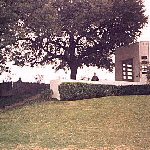
Her hand drew back from the splicer as though she had received an electric shock. She stared openmouthed with astonishment at the frame in the viewfinder. There was no mistaking the white pergola that stood on a small hill—what was to become known as the infamous grassy knoll.
My mother shot this footage in Dealey Plaza!
The University of Texas record clerk's words reverberated in her brain: Bernice Dowling left college in December of 1963. That was just weeks after the Kennedy assassination.
Marsha's hand trembled as she advanced the film, and the presidential motorcade came into view. Bernice had zoomed in at this point, and her daughter could clearly see President Kennedy smiling and waving to the crowd. Beside him was the first lady in her iconic pink suit and matching pillbox hat. Marsha held her breath as the film showed the limousine rounding the corner and coming toward the camera. She then braced herself, knowing what was to come next.
Unlike Abraham Zapruder, Bernice Dowling did not capture the fatal shots on film. Apparently, she had been distracted by a sound or sudden movement behind her and had inadvertently turned her Bell & Howell camera from Kennedy's Lincoln Continental limousine to the picket fence on the grassy knoll. As Marsha stared in mute fascination she saw the silent passage of history before her eyes.
Her mother's simple reel of 8mm film clearly showed that there had been a shooter standing behind that fence, although the man's features could not be distinguished in the smoke and shadows. As the spectators in the crowd either ran for cover or dropped to the ground at the sound of the shots being fired, the gunman came out of hiding. The assassin—or at least one of the shooters—dressed in a Dallas policeman's uniform, then nonchalantly walked toward the crowd and began trying to restore order. Although frightened by what she had witnessed, Bernice continued to film the man in the police uniform until he turned and looked directly at her.
The remainder of the film was blank. Bernice apparently removed it from the camera without finishing the reel.
* * *
It took more than an hour for Marsha's nerves to settle. Her mother had captured on film one of the gunmen in the Kennedy assassination, the mysterious shooter on the grassy knoll. Bernice's simple reel of 8mm film would once and for all prove beyond the shadow of a doubt that Lee Harvey Oswald had not acted alone—presuming he had been involved in the assassination at all.
Why then had she kept this film locked in a safety deposit box for forty years? She should have given it to the Dallas police, the FBI or the Secret Service. At the very least, she should have forwarded it to the Warren Commission. If she had, their conclusion would have been very different.
As Marsha rewound the film back to the left-hand reel, she debated what she would do with it. Should she go to the local police or the federal government? What about the press? CNN would no doubt pay top dollar to broadcast those few moments of silent footage.
Uncertain about what course of action she should take, Marsha put the reel of film in her jewelry box for safekeeping. Then she turned on the television in her bedroom as she got ready for bed. After making herself comfortable beneath the blankets, she scanned through her favorite channels but could find little that interested her. Finally, she decided to watch an old Roger Corman horror movie on the Syfy channel. Halfway through the thriller, Marsha's eyes closed and she dozed off. Through a sleepy haze, she heard the movie break for commercials.
After ads for Verizon, Toyota, Dell and Purina Dog Chow, the station plugged an upcoming movie: "Freddy's back and he's badder than ever. Watch Nightmare on Elm Street 3: The Dream Warriors this Friday at 8:00."
Marsha's eyes opened, and the haze of sleep quickly evaporated as she remembered her mother's dying words.
"Frightened ... terrified," Bernice had said. "Nightmare ... Elm Street."
Her mother's fears had nothing at all to do with Freddy Krueger, but with the real-life nightmare she had witnessed forty years earlier on Houston and Elm Streets in Dealey Plaza in Dallas.
Marsha concentrated hard, trying to remember what else her mother said. She should have paid closer attention, but at the time she mistakenly thought Bernice was rambling.
Suddenly, Marsha remembered her mother's warning: "You must be careful, or they'll get you, too. Destroy that movie. Promise me!"
It all fell into place now. Marsha finally understood the answers to the questions that had been bothering her since her last remaining parent died.
"My mother was afraid that something would happen to her if anyone found out about her film. That's why she locked it away in a safety deposit box."
Marsha had seen Oliver Stone's movie JFK and remembered its allegations that several witnesses to Kennedy's assassination had either disappeared or died under mysterious circumstances. That had to be why Bernice left college and moved to Massachusetts: she fled Texas for her own safety. But the move east failed to bring her peace of mind. As long as Marsha could remember, her mother had been a nervous, frightened woman, jumping at shadows.
Marsha was now left with a difficult choice. She promised her mother that she would destroy the film. Could she in good conscience go back on her word now?
"But the world needs to know the truth about what happened," she said.
After a few moments, a voice inside her head asked, "Why?"
Why indeed? Kennedy was dead; the truth would not bring him back. Jackie was dead; the truth would not give her closure. Oswald was dead as was Jack Ruby, the man who shot him in the Dallas police station on national television. Besides, the film did not exonerate Lee Harvey Oswald; it only proved the existence of a second shooter. Would it bring that unknown gunman to justice? Possibly. But he might be dead, too. And what of the other conspirators? If Oliver Stone was to be believed, the plot to kill Kennedy involved the Dallas police, the FBI, the CIA, the mafia, top-ranking members of the military and even, to some extent, President Lynden B. Johnson. How many of those involved were still alive?
And what about witnesses? Marsha wondered. How many people, like her mother, took their terrible secrets of November 22, 1963, to the grave? How many of them were still alive, perhaps even after all this time fearful for their safety? Might there somewhere be another piece of damning evidence? A photograph? A diary? A taped conversation? Or just another simple reel of film?
"Perhaps someday the truth will come out," Marsha said with a sigh.
Then she got up from her bed, took the reel of 8mm film and carefully hid it in the lining of an old winter coat until she could get to the bank and rent her own safety deposit box.
"Someday," she concluded, "but not today."
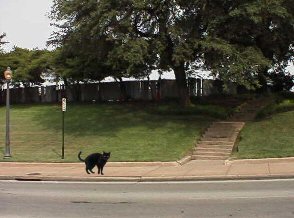
I have no idea what Salem was doing by the grassy knoll in Dealey Plaza. It's a long way from our saltbox in Massachusetts.


